
Grief isn’t just sadness – it’s a complex tapestry of emotions that can overwhelm us when we lose someone we love. While we often hear about the five stages of grief (denial, anger, bargaining, depression, and acceptance), the reality is rarely so neat and orderly. Your grief journey is uniquely yours. Consult Dr Sharmila for managing it through Grief Therapy in Mumbai
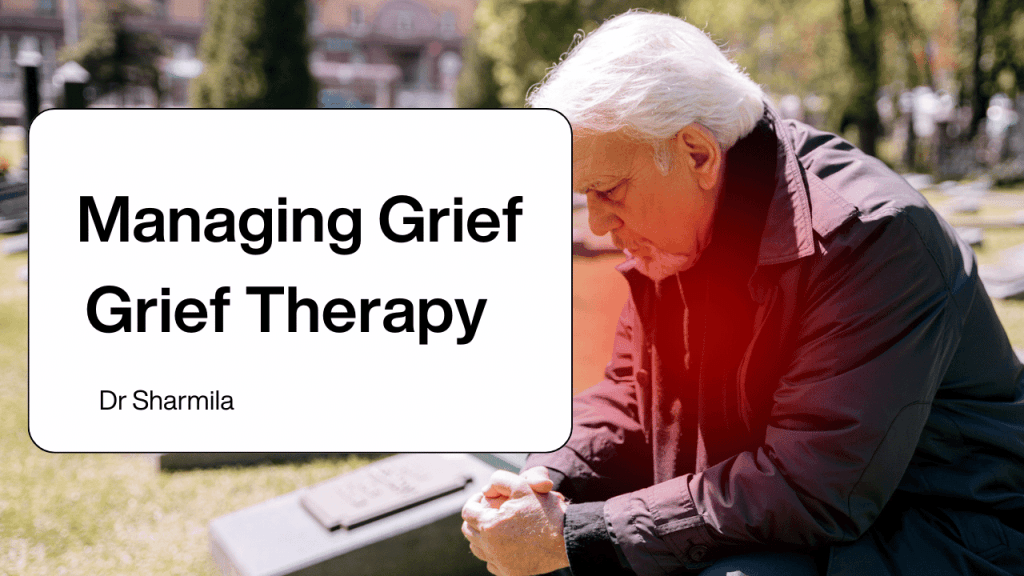
In the quiet corners of his empty house, Sam found himself struggling with a silence he never expected to face at forty-five. Life had changed abruptly when his wife, Sarah, was diagnosed with a sudden illness that took her away far too soon, leaving behind their teenage son Mike and twelve-year-old daughter Emma.
The once-vibrant home where Sarah’s laughter used to echo now felt heavy with unspoken grief. Sam found himself juggling between being a father, a homemaker, and a professional – roles that Sarah had seamlessly managed while he focused on his career. Simple tasks like preparing breakfast, checking homework, or attending parent-teacher meetings became mountains to climb.
During quiet evenings, when the children were asleep, Sam would sit alone with his thoughts, remembering the arguments he had with Sarah over small things – arguments that now seemed so pointless. He hadn’t noticed how his silence was affecting his children until one day when Emma found him staring blankly at old family photos.
Emma, wise beyond her years, shared her concerns with Mike. Together, they researched and found a Family Constellation therapist who could help their father process his grief. At first, Sam was hesitant, but seeing his children’s worry convinced him to give it a try.
During the therapy sessions, something unexpected emerged. As Sam explored his feelings, he discovered that his way of relating to Sarah mirrored how his father had treated his mother, and before that, how his grandfather had behaved with his grandmother. It was a pattern of taking love for granted, of not expressing appreciation until it was too late.
“She never complained,” Sam shared during one session, his voice breaking. “Even when I was difficult, she kept our home running with a smile. I never told her how much that meant.”
The therapy revealed more than just grief – it showed Sam how love can be expressed differently, and how patterns can be changed. Through the constellation work, he found a way to acknowledge Sarah’s love and sacrifices, even though she was no longer physically present.
As the sessions continued, Sam began to heal. He learned to forgive himself for the arguments, the times he took Sarah for granted, and most importantly, he learned to be present for his children in a way he hadn’t before. Mike and Emma noticed the change in their father – how he began to share stories about their mother, how he started asking about their day, and how he learned to both grieve and celebrate Sarah’s memory.
Today, Sam still misses Sarah deeply, but the sharp edge of grief has softened into gentle remembrance. He’s broken the family pattern by becoming more emotionally available to his children, showing them that it’s okay to feel, to grieve, and to love openly.
Grief is as unique as the relationship we shared with our loved one. As a managing grief therapist, I’ve witnessed countless variations of this profound human experience. Let’s explore this journey together with compassion and understanding.
Our bodies and minds respond to loss in profound ways. You might find yourself:
These reactions are all normal parts of grieving. Your body is processing a significant change, and it needs time to adjust.
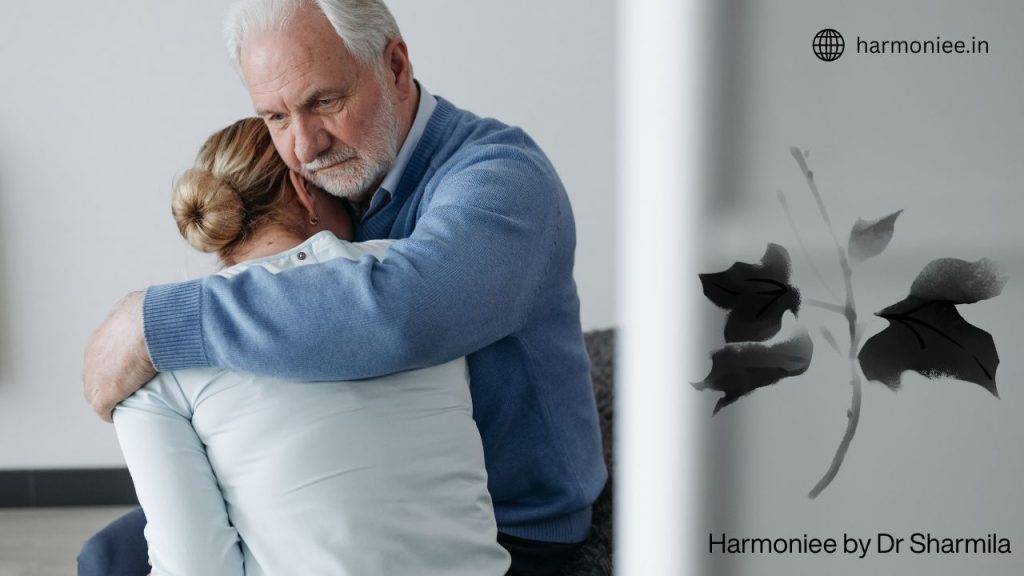
One of the most important things I tell my clients as a managing grief therapist is that there’s no “right” way to grieve. Some find comfort in talking about their loved one, while others need time alone to process their feelings. Both approaches are valid.
Creating a routine can provide stability when everything feels chaotic. Simple activities like:

Many find healing in creating ways to remember their loved one. This might include:
Self-care isn’t selfish – it’s essential. This includes:
No one should face grief alone. Support can come in many forms:
Anniversaries, birthdays, and holidays can be particularly challenging. Planning ahead for these dates can help:
Remember, moving forward doesn’t mean forgetting. It means finding a way to carry your loved one’s memory with you while continuing your own life journey. This process takes time, patience, and often professional support.
If this story resonates with you, and you wish to explore your own emotional patterns and family roots in a safe, guided space, I welcome you to experience Grief Therapy at Harmoniee.
Remember, seeking help isn’t a sign of weakness but of wisdom. Whether through professional support, community groups, or loved ones, you don’t have to navigate this path alone. Your grief is valid, your feelings matter, and there is hope and healing ahead.
If you’re struggling with grief, know that support is available. Together, we can find ways to honour your loss while building a meaningful path forward.
Book your session with Dr. Sharmila
Dr. Sharmila employs a compassionate and holistic approach in her therapy sessions. She focuses on understanding the root causes of issues and utilizes various therapeutic techniques to help clients release physical and emotional ailments. As a Grief therapist in Mumbai, she aims to empower individuals to embrace their bodies and cultivate self-acceptance.